Fixing EHR Integration Gaps in 2026
The scale of healthcare has evolved dramatically over the last few years. Large-scale ambulatory networks, multi-specialty groups, and expansive outpatient organizations are no longer just dealing with localized data. They are managing massive, distributed networks of clinics, complex workflows, and thousands of data transactions every single day. It is surprising to see that 97% of healthcare data goes unused, according to the World Economic Forum.
Although it's impractical to capture all the data, one of the major reasons for this gap is data fragmentation, as you can see, almost 80% of healthcare data is unstructured. As we move through 2026, the primary point of friction for these organizations is getting these massive digital ecosystems to communicate. For large outpatient organizations, achieving connectivity introduces structural friction that smaller practices rarely encounter.
This comprehensive guide explores why organizations encounter a distinct set of EHR challenges, what clinical leaders must prioritize, and how the advanced architecture of
Meditab’s IMS successfully mitigates these risks.
EHR Integration Challenges in 2026
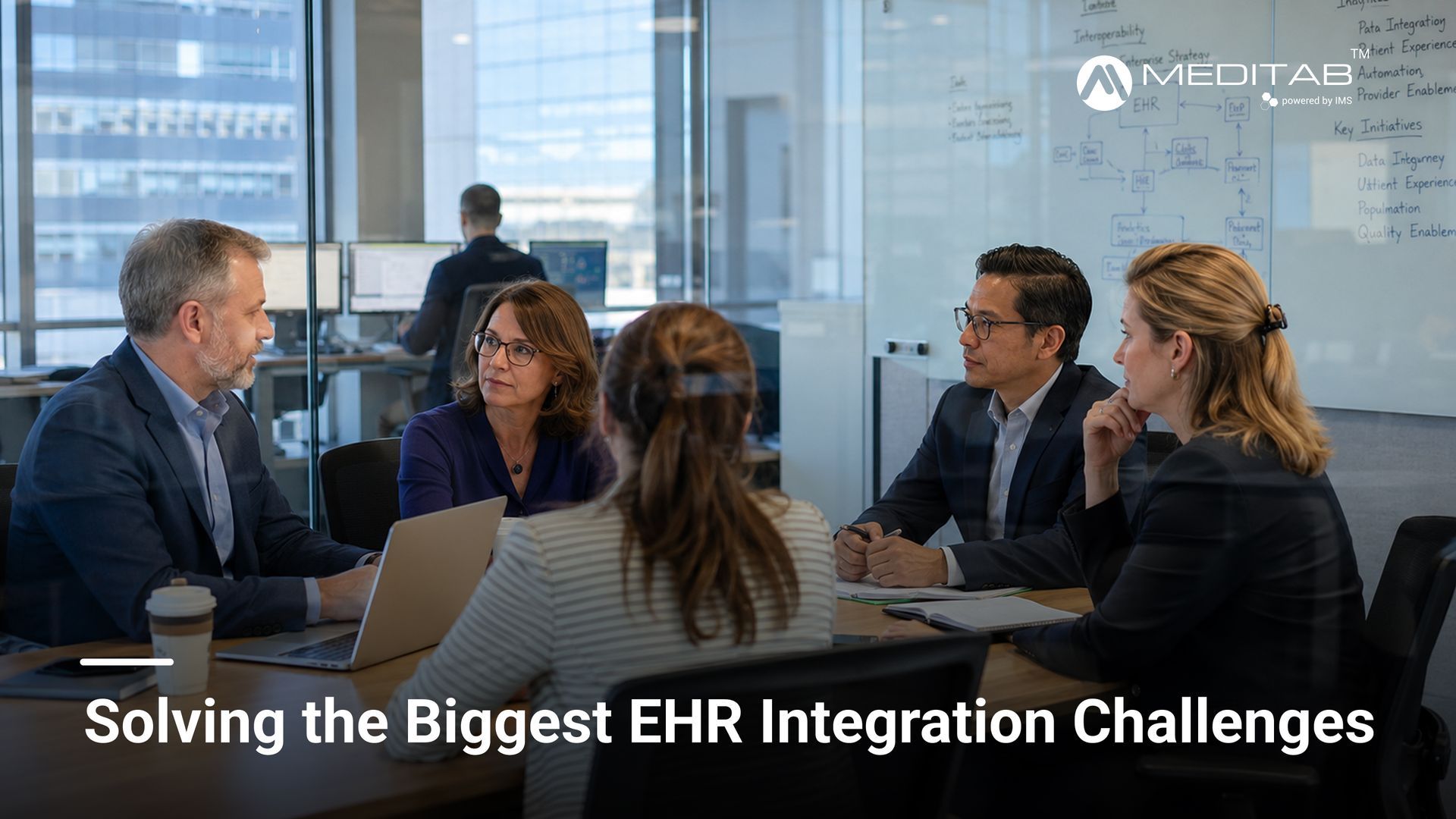
To maintain operational continuity, protect financial performance, and combat provider burnout, large ambulatory organizations must confront the unique challenges of EHR integration. Here is what leaders are grappling with today.
1. Interoperability Complexity
One of the biggest challenges of electronic health records today is achieving complete interoperability. Practices rely on multiple systems, such as labs, pharmacies, billing platforms, and third-party tools. Even with standards like HL7 and FHIR, integration is not always seamless. Data inconsistencies, API limitations, and vendor restrictions often lead to fragmented workflows. Learn more about
interoperability in healthcare and how it impacts your practice.
2. Data Migration and Legacy Systems
EHR migration remains one of the most critical EHR implementation challenges. Clinics often operate on legacy systems with years of patient data. The key issues include:
- Data loss during migration
- Inconsistent data formats
- Downtime affecting operations
Without a structured approach, these EHR integration mistakes can disrupt both clinical and financial workflows.
3. Scaling Across Multi-Location Practices
Ambulatory organizations often operate across multiple clinics or specialties. Scaling an EHR system across locations introduces challenges such as:
- Standardizing workflows
- Maintaining consistent data access
- Managing user roles and permissions
Many EHR companies struggle to provide flexible yet unified systems for such environments.
4. Regulatory and Compliance Pressure
Healthcare billing compliance and regulatory requirements continue to evolve. The healthcare systems must stay updated with:
- HIPAA regulations
- CMS guidelines
- Payer-specific rules
Failure to comply can lead to penalties, audits, and revenue loss, making compliance one of the most critical EHR challenges.
5. Integration with Revenue Cycle Management (RCM)
For enterprise practices,
EHR systems must integrate easily with billing and RCM workflows. The common issues include:
- Disconnected billing systems
- Delayed claims processing
- Increased denial rates
Poor integration directly impacts revenue, making this a key concern in the future of EHR integration.
6. User Adoption and Training Gaps
Even the most advanced systems fail if users don’t adopt them effectively. Practices often face:
- Staff resistance to new systems
- Inconsistent training across locations
- Reduced productivity during transition
These
EHR implementation challenges can delay ROI and impact patient care.
What Enterprise Leaders Should Prioritize in 2026
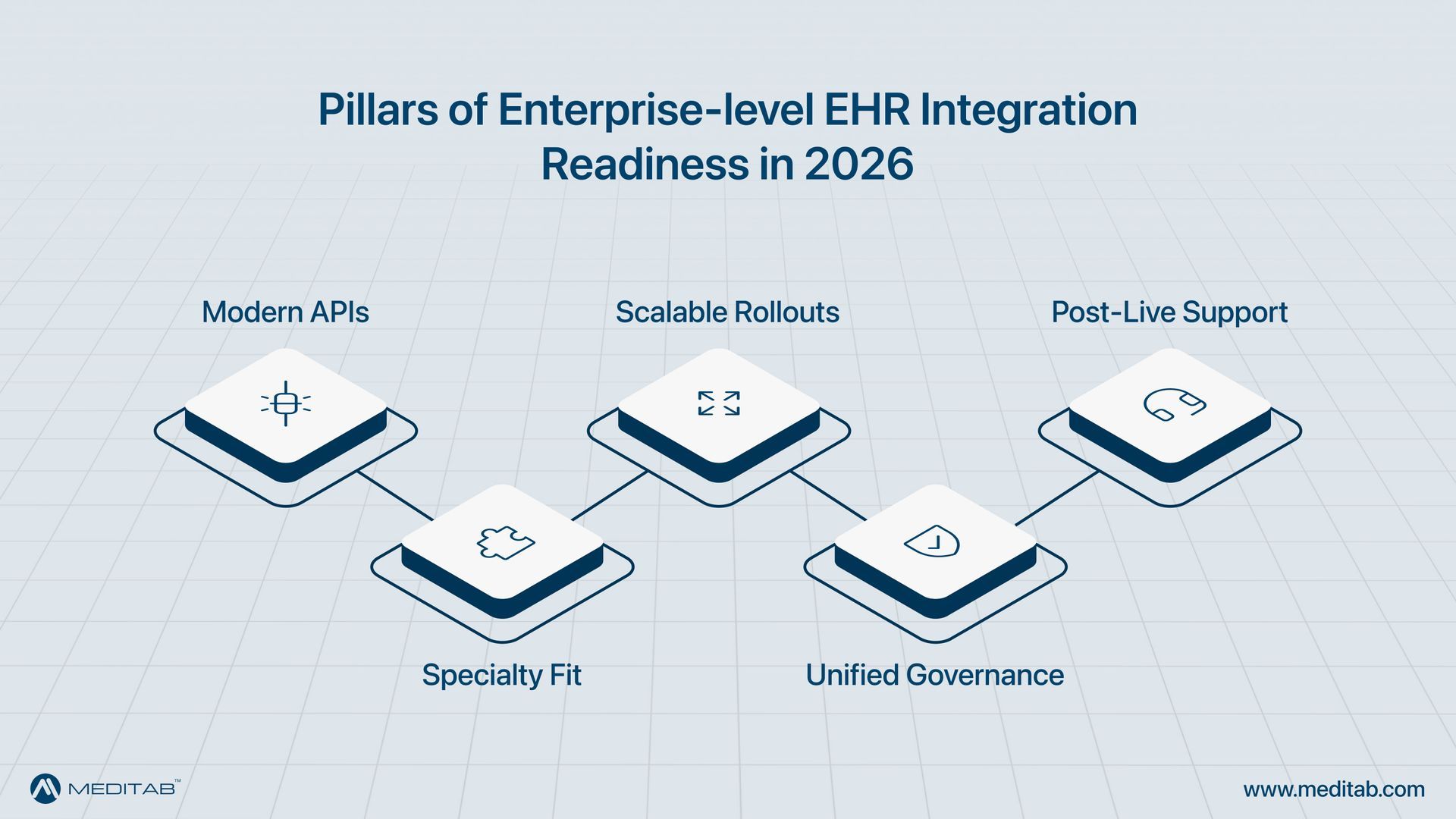
Enterprise leaders should focus on practical outcomes instead of feature lists. The priority should be interoperability that works in everyday ambulatory workflows, not just in technical documentation. When evaluating a platform, leaders should ask whether the system supports efficient data exchange across existing apps, vendor partners, and internal departments. Here are the priorities that matter most:
- Standardized data exchange through modern APIs and proven interoperability frameworks.
- Strong workflow alignment for ambulatory specialties.
- Scalable testing and implementation planning.
- Clear governance for security, compliance, and change management.
- Vendor accountability for post-go-live integration support.
Leaders should also compare integration readiness against their broader strategy. A platform may reduce short-term EHR implementation challenges, but if it cannot scale with growth, it will create new problems later. For this reason, many teams now treat interoperability as a core business requirement rather than a technical add-on.
How Modern EHRs Like Meditab's IMS Solve These Challenges
Meditab’s IMS (Intelligent Medical Software) was not built as a simple digital filing cabinet. It is envisioned as an integration hub for ambulatory practices. Here is how IMS turns EHR integration challenges of 2026 into competitive advantages.
Advanced Native Interoperability
Meditab IMS eliminates the reliance on fragile, third-party middleware. By focusing heavily on healthcare interoperability, IMS establishes native data bridges across your entire clinical ecosystem. This architecture ensures that cross-platform data, such as laboratory orders, imaging results, and incoming referrals, flows instantly and securely into the primary patient chart.
Scalable FHIR Integration
Built for modern computing demands, Meditab provides complete access to its secure,
high-speed FHIR with overview specifications. This web-based standard allows enterprise developers to deploy custom applications, connect third-party digital tools, and manage thousands of secure, concurrent data requests without causing system lag or screen latency.
Specialty-Specific Multi-Clinic Workflows
Instead of forcing every provider into a rigid corporate template, Meditab IMS supports multi-specialty practices with tailored clinical modules. Whether your network includes pediatrics, orthopedics, physical therapy, or cardiology, the platform adapts to the unique workflows of each clinical branch while maintaining unified billing and a single corporate database.
Verified Partner and Vendor Connectivity
Expanding a practice requires an open, well-supported technology ecosystem. Through Meditab's dedicated
EHR Integration hub, large practices gain immediate access to pre-validated interfaces with top reference laboratories, state registries, clearinghouses, and medical devices, effectively eliminating the implementation delays that cause major revenue loss.
In A Nutshell
Healthcare faces distinct EHR integration challenges because the stakes are higher, workflows are more complex, and there are many more moving parts. In 2026, the organizations that succeed will be the ones that treat integration as a strategic priority, not an afterthought. By focusing on interoperability, testing, governance, and ambulatory workflow fit, enterprise leaders can reduce electronic health records challenges before they affect revenue or staff productivity.
Modern EHRs like Meditab’s IMS make that possible by supporting practical integration and scalable ambulatory operations.
FAQs
What is the single biggest EHR integration mistake enterprises make in 2026?
The top issues include data silos, interoperability gaps, scalability limitations, and change management across multiple locations.
What makes enterprise EHR integration more difficult?
Enterprise teams manage more locations, users, specialties, and vendors, increasing complexity and the risk of integration failure. That is why EHR integration challenges are more visible at scale.
Why do enterprise practices face more EHR challenges?
Enterprise practices operate across multiple locations and systems, making integration, standardization, and scalability more complex.
How do modern APIs address the challenges of electronic health records in large clinics?
Modern frameworks like FHIR APIs allow systems to request specific, granular data points (such as a single lab value or medication list) rather than transferring massive, unstructured PDF documents. This reduces system strain, eliminates screen lag, and ensures safer patient care.
Can Meditab IMS integrate with my existing RCM or population health tools?
Yes. Through our comprehensive Vendors and Integrations program, IMS offers pre-built interfaces and custom integration support for a wide range of ambulatory-focused tools, from billing software to patient engagement platforms. We view our role as the central hub in your technology ecosystem.
Share this post: