Understanding Different EHR Systems and Their Benefits

The healthcare industry is dependent on the transformation driven by Electronic Health Record (EHR) software. They are essential for improving clinical documentation, administrative workflows, and other healthcare practice workflows. According to McKinsey, when an EHR is implemented well, it can result in 5% to 10% cost reductions through improved operational efficiency. An incorrect choice here can lock your practice into workflows that are not practical for the next 7-10 years.
All EHRs support various functionalities unique to them. With multiple types of EHR solutions available, choosing the right solution can be challenging. As of 2024, cloud-based EHR solutions accounted for
55% of revenue. Every EHR software has its own set of advantages, limitations, and deployment models. Together, as a list of options, they make it critical for practices to understand their options before investing. This article explores different EHR software, their features and benefits, and how Meditab’s IMS, among them, works for your practice.
What Are EHR Systems?
Electronic Health Record (EHR) solutions are digital platforms that store, manage, and share patient health information in real time. Unlike traditional paper records, EHRs provide a comprehensive, patient-centered view of medical history, treatments, medications, and clinical outcomes.
Today’s leading EHRs, such as Meditab’s Intelligent Medical Software (IMS), go beyond documentation. They integrate clinical, financial, and administrative workflows, helping practices improve efficiency, enhance patient care, and optimize revenue cycles.
Key Features of EHR Software
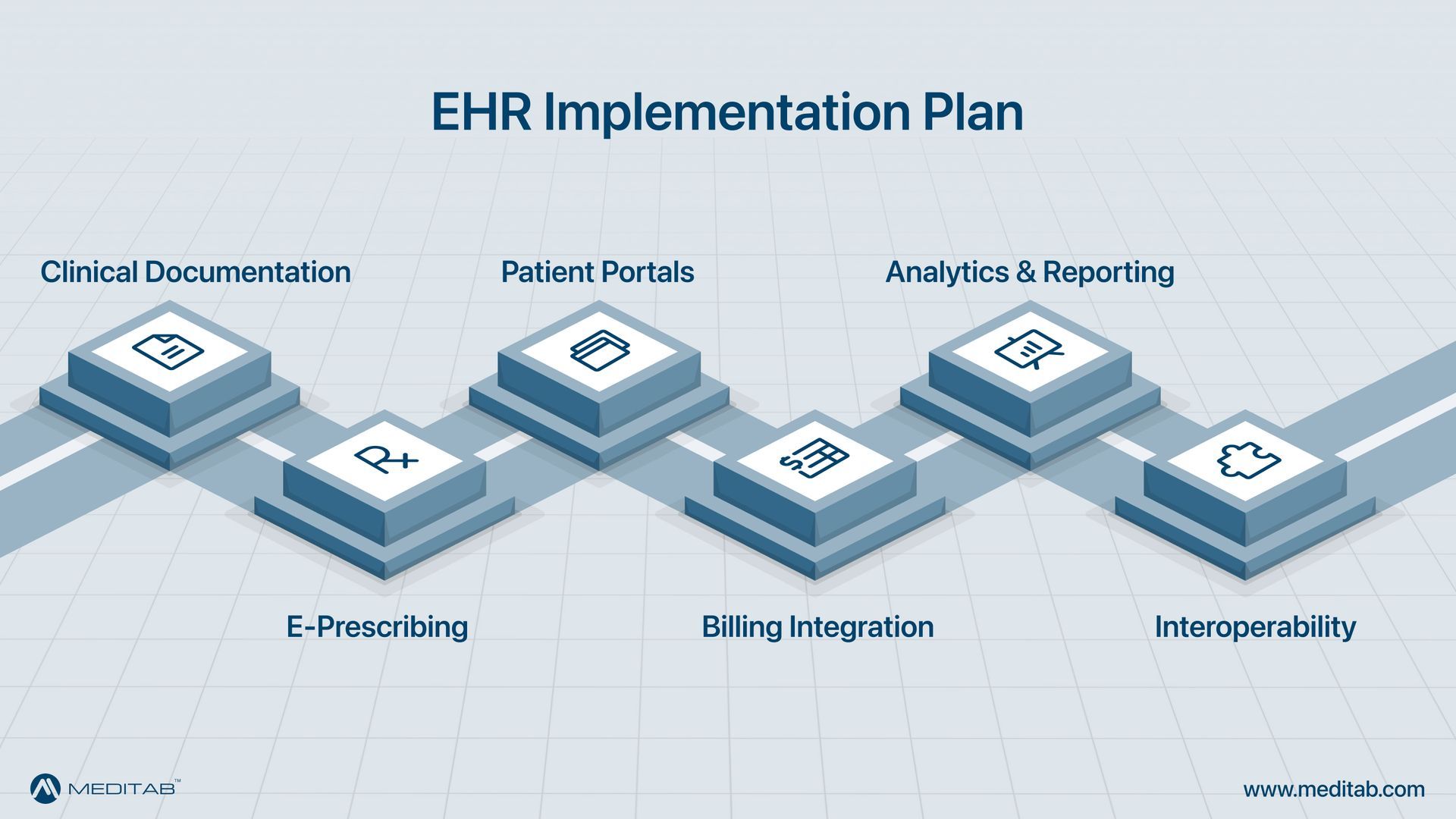
While different EHR systems vary in structure and deployment, most of the best EHR solutions share a core set of functionalities:
- Clinical Documentation: Accurate patient records
- e-Prescribing: Digital prescription management
- Patient Portals: Improved patient engagement and communication
- Billing Integration: Makes revenue cycle management faster
- Analytics & Reporting: Data-driven decision-making
- Interoperability: Integration with labs, diagnostic centers, pharmacies, and other software
These features ensure that practices can deliver efficient, high-quality care while maintaining operational control.
Types of EHR Software
Understanding the types of EHR solutions is essential for selecting the best solution for your practice. Below are the most common categories:
1. On-Premises EHR Systems
On-premises EHR software is hosted on servers located within the practice’s physical infrastructure. This model gives organizations complete control over their data and software configurations.
Key Characteristics
- Requires in-house IT support
- Higher upfront costs for hardware and setup
- Full control over security and customization
Best For: Practices that prefer direct control over their data and have dedicated IT resources.
2. Cloud-Based EHR Software
Cloud-based solutions are hosted on external servers and accessed via the internet. This is one of the most popular EHR types due to its pricing, flexibility, and scalability.
Key Characteristics
- Lower upfront costs
- Remote accessibility
- Automatic updates and maintenance
Best For: Practices looking for cost-effective, scalable, and easy-to-manage solutions.
3. ASP EHR Solutions (Application Service Provider Systems)
Application Service Provider (ASP) systems are a type of hosted solution where the vendor manages the software, but the software may still require local installations or specific configurations.
Key Characteristics
- Vendor-managed infrastructure
- Limited customization compared to on-premises software
- Moderate cost structure
Best For: Practices seeking a balance between control and vendor support.
4. SaaS EHR Solutions (Software as a Service)
Software-as-a-Service (SaaS) EHR systems are fully web-based solutions delivered via subscription. They are often considered a subset of cloud-based software but with a stronger emphasis on usability and continuous updates.
Key Characteristics
- Subscription-based pricing
- No dedicated IT hardware for hosting or backups
- Regular feature updates
Best For: Practices that want a modern, user-friendly solution with minimal IT involvement.
5. Open-Source EHR Solutions
Open-source systems provide access to the software’s source code, enabling users to customize the platform to their needs.
Key Characteristics
- High customization potential
- Lower software licensing costs
- Requires technical expertise
Best For: Organizations with strong IT capabilities and unique workflow requirements.
Benefits and Challenges of Different EHR Software
Each EHR software has its own advantages and limitations.
Benefits
- Improved patient care through accurate data access
- Enhanced workflow efficiency
- Better compliance and reporting
- Increased revenue through streamlined billing
Challenges
- High implementation costs (especially for on-premises solutions)
- Training and adoption hurdles
- Data migration complexities
- Ongoing maintenance requirements
Understanding these factors helps practices evaluate which EHR type aligns best with their operational needs.
How to Choose Which EHR Software is Right for Your Practice
Selecting the right EHR system is a strategic decision that impacts every aspect of your practice. Here are key considerations:
1. Practice Size and Specialty
Different specialties have unique workflows. Ensure the software is tailored to your specific needs.
2. Budget and Cost Structure
Evaluate both upfront and long-term costs, including licensing, maintenance, and upgrades.
3. Scalability
Choose a software that can grow with your practice.
4. Ease of Use
User-friendly interfaces improve adoption.
5. Integration Capabilities
Ensure compatibility with existing software and third-party tools.
6. Support and Training
Reliable vendor support is critical for long-term success.
By carefully assessing these factors, practices can identify the
best EHR solutions that align with their goals.
Transform Your Practice with Meditab’s IMS
When evaluating the leading EHRs on the market, Meditab’s Intelligent Medical Software (IMS) stands out! It is a uniquely flexible solution designed for 40+ healthcare specialties. Unlike rigid platforms that force you into a specific deployment model, IMS is built to adapt to your practice’s specific infrastructure and goals.
We prioritize total data control to enable maximum mobility. Meditab’s IMS supports on-premises, cloud-based, ASP, and SaaS EHR software. This versatility ensures that you can choose the architecture that best fits your IT resources and budget. By partnering with Meditab, you gain access to a platform that offers:
- Deployment Versatility:
The freedom to host your data on-site via on-premises servers or leverage the accessibility of cloud, ASP, and SaaS models. - Swift Clinical and Administrative Integration:
A unified system that connects every aspect of your practice. - Scalable Architecture:
A solution that grows alongside your practice, regardless of your chosen EHR type. - Intuitive User Experience:
Specialized workflows and an easy-to-use interface that reduce clinician burden. - Detailed Analytics and Reporting:
Data-driven insights to optimize your clinical and financial performance.
Whether you are transitioning from legacy software or upgrading to a more modern environment, Meditab helps you
implement the right EHR
software and IMS with a dedicated team to guide you through the entire process with minimal disruption.
To Sum Up
Understanding the types of EHR software helps assess on-premises EHR solutions, SaaS EHR systems, and other options. Each option offers unique advantages depending on your practice’s needs. The key is to evaluate your workflows, budget, and long-term goals to identify the best fit. With the right approach and the right partner, you can improve patient outcomes and drive sustainable growth.
Frequently Asked Questions (FAQs)
What are the main types of EHR software?
The main types of EHR solutions include on-premises, cloud-based systems, ASP solutions, SaaS EHR systems, and open-source systems.
Which EHR type is suitable for small practices?
Cloud-based and SaaS EHR software are often considered the best EHR solutions for small practices due to their affordability and ease of use.
What is the difference between cloud-based and on-premises EHR software?
On-premise EHR solutions are hosted locally, while cloud-based software is hosted online and managed by vendors.
Are open-source EHR systems reliable?
Open-source solutions can be reliable but require technical expertise for customization and maintenance.
How do I choose the best EHR software for my practice?
When choosing the right EHR system for the practice, consider factors such as practice size, budget, scalability, ease of use, and vendor support.
Share this post: