The Comprehensive Guide to Modern Appointment Scheduling Software
The days of frantic phone calls and messy paper ledgers are quickly becoming a thing of the past. For a busy medical practice, the front desk is often the heartbeat of operations, but it can also be a significant bottleneck. When staff members spend hours every day managing cancellations, rebooking follow-ups, and playing phone tag, clinical care often takes a backseat to administrative noise.
This is where modern appointment scheduling software changes the game. It is no longer just a digital version of a desk calendar; it is a comprehensive tool that bridges the gap between provider availability and patient convenience. By automating the most tedious parts of the booking process, practices can focus on what they do best: treating patients.
IMS’s Appointment Booking System
What is Appointment Scheduling Software?
At its simplest, appointment scheduling software is a platform that allows healthcare providers to manage their calendars while giving patients the ability to book, reschedule, or cancel visits online. However, in a clinical setting, these tools go much deeper.
The best appointment scheduling platforms integrate directly with a practice's electronic health record (EHR) system. This means that when a patient chooses a time slot online, it updates the provider's schedule in real time. These systems handle the heavy lifting of logistics, including automated reminders, insurance verification prompts, and digital intake forms.
Why is Appointment Scheduling Important?
Efficiency is the primary driver behind the shift toward digital booking. Beyond internal efficiency, appointment scheduling is a critical component of the modern patient experience. Today’s healthcare consumers expect the same level of digital convenience they get from banking or retail.
Furthermore, a streamlined system frees staff to focus on the person in front of them rather than the phone. When the team has more time for one-on-one interaction, patients feel more welcome and calm. This personalized attention creates a superior care experience, making it much more likely that a patient will return to the office for future needs.
The Power of Choice: Televisit is now integrated with ABS
One of the most significant advancements in patient access by Meditab is that Televisit is now integrated with ABS. Patients can choose between in-office visits and televisits with their preferred providers, and select convenient time slots.
The Appointment Booking System offers a fully configurable dashboard for providers, allowing them to display options for either appointment type. This streamlines the scheduling process for patients while enabling providers to effectively manage appointments.
Whether a patient requires a physical examination or a quick virtual follow-up, Meditab's Appointment Booking System (ABS) accommodates both with ease.
Benefits of Appointment Scheduling Software
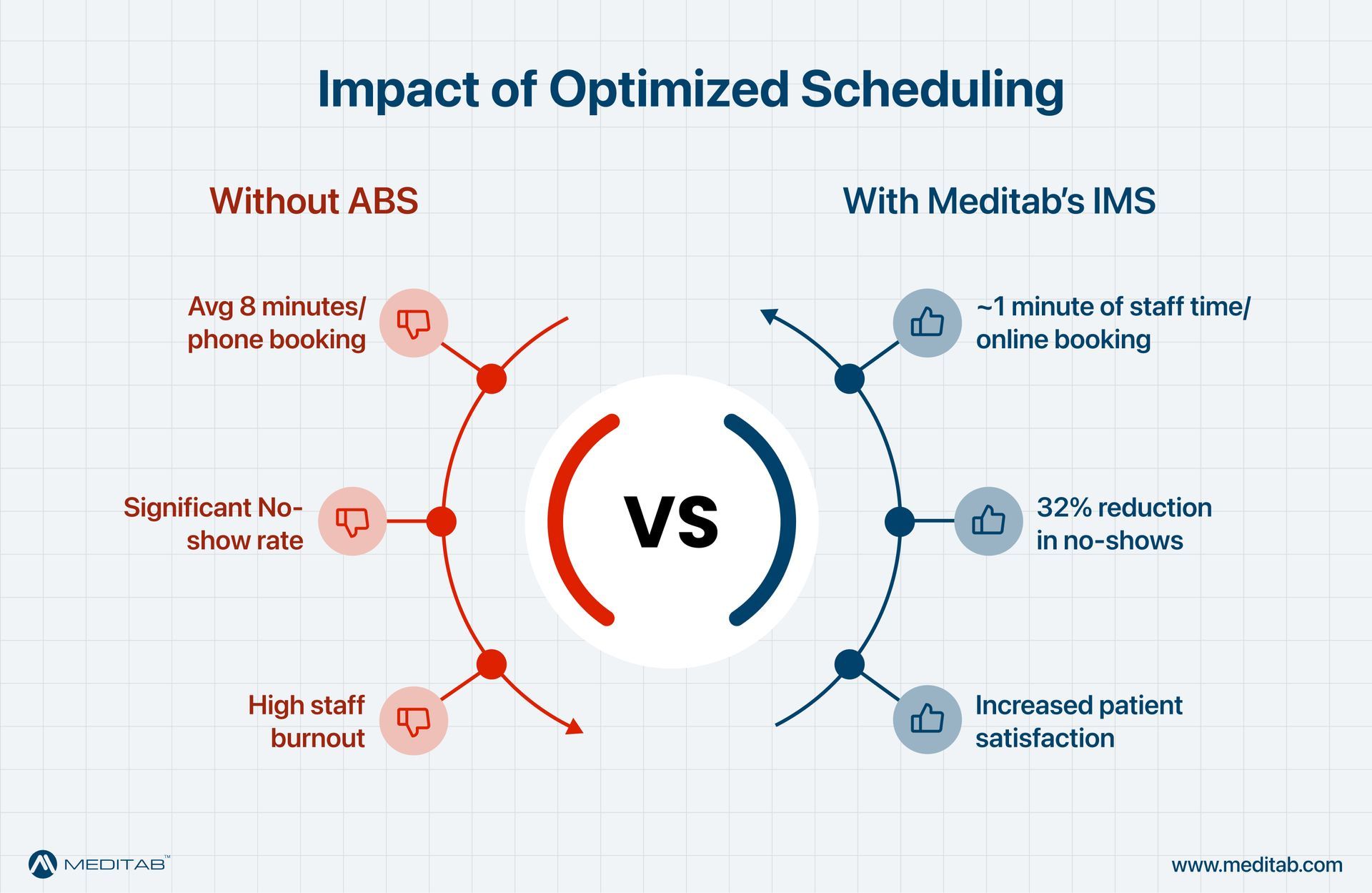
Implementing a robust appointment booking software solution offers several advantages:
Enhanced Patient Autonomy
Patients can book appointments at their convenience, 24/7, without needing to speak to a staff member.
Reduced Administrative Burden
Front-desk staff can focus on patient interactions and building rapport with patients rather than being tied to a phone.
Minimized Human Error
Real-time synchronization ensures the calendar is always accurate, preventing double booking.
Improved Revenue Cycle
Systems can prompt patients for co-pays or insurance updates at the time of scheduling.
Better Data Insights
Providers can track trends, such as peak booking times, to optimize staffing levels.
What to Consider When Investing in a Solution
When searching for the right fit, focus on how the tool integrates with your existing workflow:
1. EHR and PMS Integration
The software must "talk" to your EHR to avoid double data entry.
Learn how Meditab’s IMS integrates scheduling and clinical data.
2. Customization
Your system should allow for custom appointment types, varying slot lengths, and provider-specific rules.
3. Automated Communication
Look for a platform that offers multi-channel reminders via text, email, or phone.
4. Mobile Accessibility
The ability to check and manage schedules from a mobile device is a must-have for modern clinicians.
5. HIPAA Compliance and Security
Ensure the platform adheres to all HIPAA regulations to protect sensitive patient information.
Ease of Use for Both Patients and Providers
A successful transition relies on adoption. Meditab’s Appointment Booking System (ABS) is designed with a "patient-first" philosophy, allowing patients to book in just a few clicks. For providers, the ease comes from color-coded dashboards and real-time updates. When a patient checks in for a televisit through the portal, the provider is instantly notified, ensuring the entire office moves in harmony.
Conclusion
The transition to digital appointment scheduling is a commitment to better patient service and operational excellence. By removing barriers to booking and offering the flexibility of integrated video and phone appointments, practices can create a more welcoming environment for patients and a more productive workplace for staff.
Appointment Booking Efficiency
Frequently Asked Questions
Can patients reschedule their own appointments online?
Yes, most modern systems allow patients to change or cancel visits through a secure portal, which automatically updates the practice's main calendar.
How do automated reminders help my practice?
Automated reminders send alerts to patients via text or email, significantly reducing no-shows and helping you keep your schedule full.
Is appointment booking software difficult to set up?
When choosing an EHR like Meditab, the process includes guided setup, detailed training, and integration with your existing workflows, making the transition smooth.
Does the software handle multi-location practices?
Yes, high-quality platforms are designed to manage multiple providers across different physical locations from a single, centralized dashboard.
Share this post: