How Mobile EHR Solutions & AI Are Transforming Patient Care in 2026
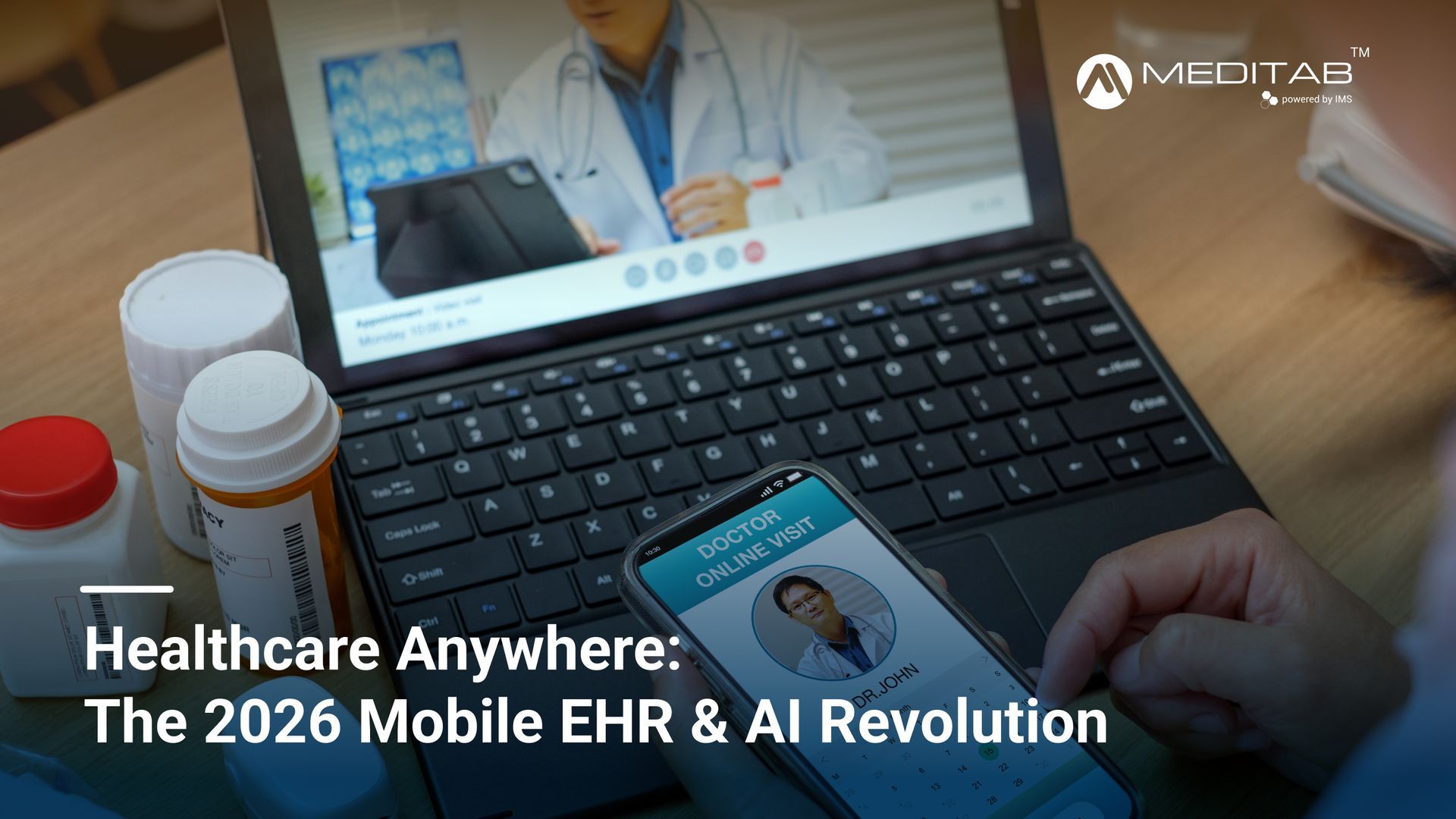
The landscape of healthcare has moved far beyond the four walls of an exam room. As we navigate 2026, the traditional image of a doctor hunched over a desktop computer is fading. Instead, the focus has shifted toward a more fluid, responsive, and intelligent way of practicing medicine.
Today, mobile healthcare isn't just a luxury for large enterprises; it is the heartbeat of efficient practices. By merging the portability of mobile EHR solutions with the predictive power of Artificial Intelligence (AI), the industry is addressing age-old hurdles such as clinician burnout and patient fragmentation. At Meditab, we’ve seen firsthand how these tools help providers reclaim their time and deliver care that feels more personal than ever.
Experience Meditab’s Mobile IMS
The Current State of Digital Healthcare
We have entered an era where "digital" is the default. However, being digital isn't enough anymore. In 2026, the demand is for connectivity. Practices are no longer satisfied with static data; they need information that moves with them.
This shift toward mobile EHR adoption is driven by a need for real-time accuracy and the recognition that patient data should be accessible at the point of care, whether in a clinic, at a patient’s home, or during a telehealth session.
Reflecting this trend, a
2024 survey by the U.S. National Cancer Institute found that 65 % of Americans who had online access to their medical records actively accessed them at least once in the past year, highlighting patients’ strong preference for tracking and managing their own health information.
How Mobile EHR Solutions Empower Physicians
The primary goal of any mobile EHR software is to untether the provider. When doctors aren't stuck behind a desk, the dynamics of the patient visit change.
Clinical Freedom:
With tools like
IMSGo, physicians can review charts, sign off on labs, and even manage prescriptions from their smartphones or tablets. This flexibility means that "after-hours" work doesn't necessarily mean staying late at the office.
Real-Time Documentation:
Capturing data at the bedside or in the exam room reduces the "documentation lag" that often leads to errors. When you record findings immediately through mobile EHR apps, the accuracy of the patient record increases significantly.
Streamlined Communication:
Mobile platforms allow for instant, secure messaging between staff members. If a nurse needs a quick clearance on a medication, they don't have to hunt down the doctor; a simple notification on the Mobile EHR handles it in seconds.
Enhancing the Patient Experience
In 2026, patients expect their healthcare experience to mirror their retail or banking experiences: fast, transparent, and mobile-friendly.
The
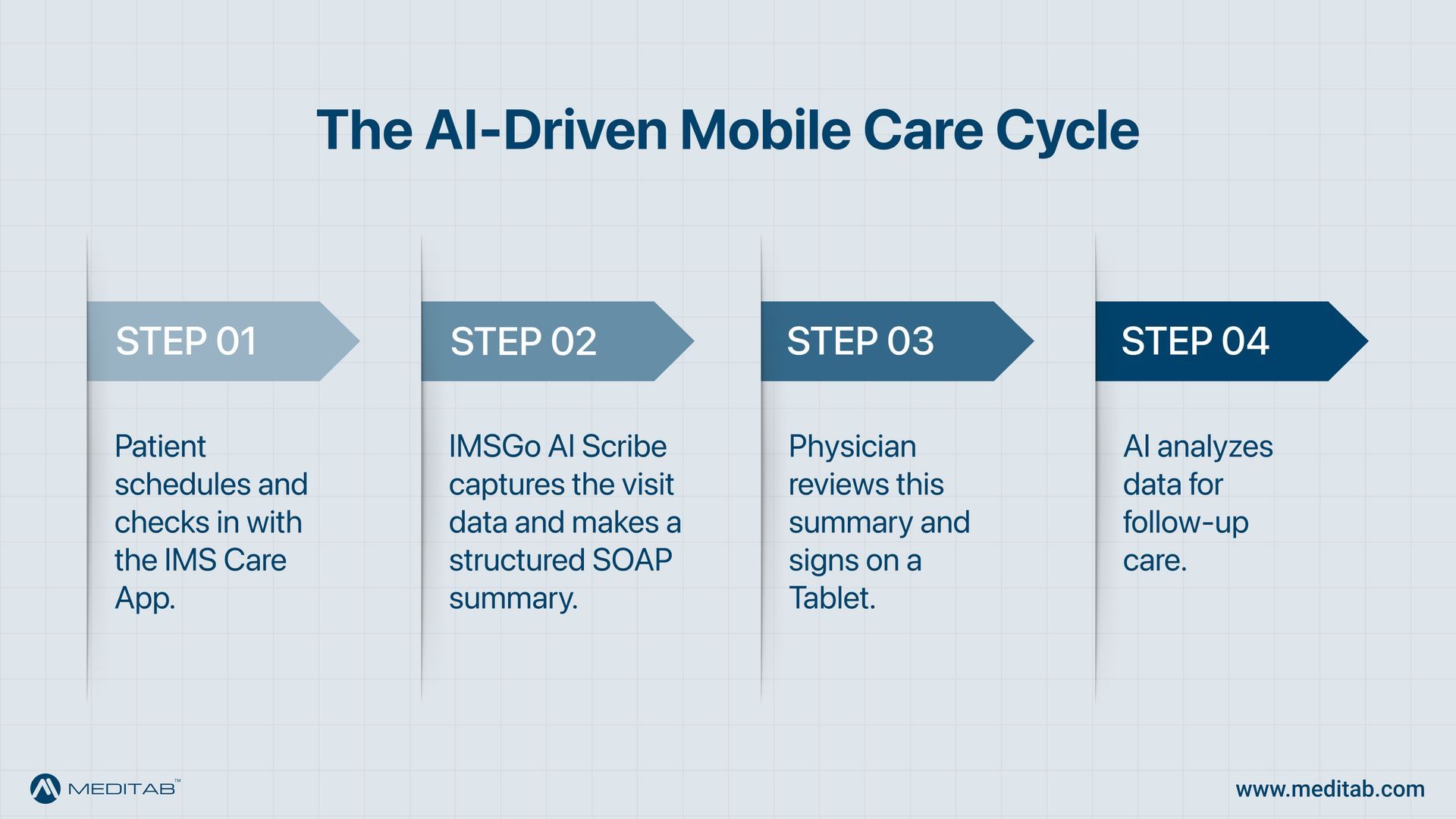
IMS Care App serves as a bridge between the provider and the individual. Patients can now schedule appointments, pay balances, and view their lab results directly from their own devices. This level of transparency builds trust.
When patients have their health data in their pocket, they are more likely to stay compliant with treatment plans and engage in preventative care. The ease of checking a "wellness score" or messaging a provider through a secure portal removes the friction that often prevents people from seeking care.
The Role of AI: An Invisible Assistant
Mobile EHR apps offer solutions for accessibility, while AI provides the means for implementing them. In 2026, AI is no longer a futuristic concept; it is an integrated clinical assistant.
One of the most significant leaps is in
AI-driven medical scribing. By using natural language processing, the EHR can listen to a patient-provider conversation and draft a structured SOAP clinical note in real time. This allows the doctor to look the patient in the eye rather than staring at a screen.
Furthermore, AI within mobile EHR solutions acts as a safety net. It can analyze vast amounts of data to flag potential drug interactions or suggest preventative screenings based on the patient’s history. It’s not about replacing the doctor’s judgment, but rather enhancing it with data-driven insights that are delivered right to their mobile device.
Looking Ahead: The Future of Mobile Care
As we look beyond 2026, the integration of wearable technology with mobile EHR software will likely be the next frontier. Imagine a world where a patient’s glucose monitor or heart rate tracker feeds directly into Meditab’s IMS platform, alerting the provider to a potential issue before it becomes an emergency. We are transitioning to a proactive healthcare model instead of a reactive one.
Conclusion
The transformation we see in 2026 is rooted in a simple idea: technology should serve the human connection, not hinder it. By using mobile EHR apps and AI, practices are shedding the administrative burden that has weighed them down for years. The result is a more agile practice, a more satisfied provider, and most importantly, a healthier patient.
Experience the Power of Meditab’s AI
Frequently Asked Questions
Is a Mobile EHR as secure as a desktop version?
Yes. Professional mobile EHR solutions use high-level encryption and multi-factor authentication to ensure that patient data remains protected and HIPAA-compliant, regardless of the device used.
Does AI in the EHR make clinical decisions for me?
Not at all. AI serves as a supportive tool, providing data summaries, automating documentation, and flagging potential risks. The final clinical decision always rests with the healthcare provider.
Can patients access their records on any mobile device?
Through dedicated platforms like the IMS Care App, patients can securely access their health information on both iOS and Android devices with a simple OTP-based login, making it easy to stay connected to their care team.
How does mobile EHR software improve billing?
By capturing charges and documentation at the point of care, Mobile EHR reduces the chances of missed charges and speeds up the submission process, leading to faster reimbursements for the practice.
Share this post: