AI, Healthcare Automation & Patient Outcomes in Allergy Care

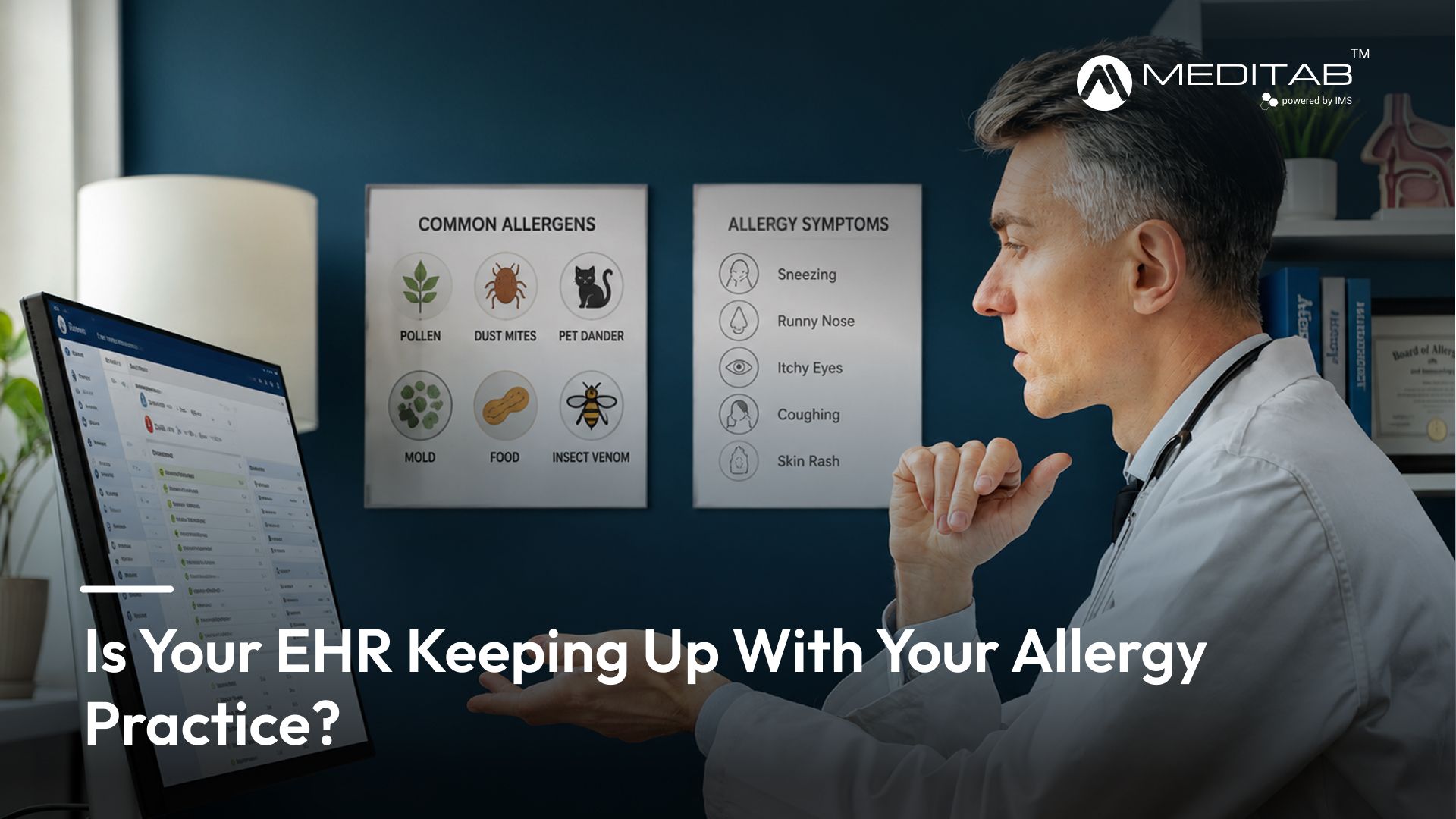
Imagine standing in your office, looking at your clinic computer—but instead of seeing a digital file cabinet filled with patient records, you see a powerful assistant reshaping your allergy practice.
This is the new reality of advanced electronic health record (EHR) systems like IMS.
Equipped with cutting-edge automation and enhanced by artificial intelligence (AI), your allergy EHR software can streamline routine tasks, simplify skin test tracking, and help you make more precise treatment decisions.
The future of allergy care is here, and it’s right on your desktop.
5 Ways Healthcare Automation and AI Boost Patient Outcomes
The integration of AI and automation in the healthcare industry is transforming patient care and improving outcomes like never before. Going beyond enhancing operational efficiencies, these technologies are changing the way healthcare providers diagnose, treat, and engage with patients. Here are five impactful ways that’s happening:
1. Higher Diagnosis Accuracy
One of the most significant benefits of AI and automation in healthcare is its ability to enhance the already high diagnostic precision that skilled allergists provide. While traditional methods rely heavily on physicians' expertise and interpretation, complex data sets can overwhelm even the most experienced practitioners. This can sometimes lead to misdiagnoses and suboptimal treatment plans.
AI-driven tools complement your skills by analyzing patient history, symptoms, and test results, identifying specific allergens with even greater accuracy. AI-enhanced systems such as IMS are designed to cross-reference data sets, validate them, and detect subtle patterns that might be difficult for even the sharpest human eye.
With fewer manual processes and more data accuracy safeguards, an advanced EHR platform like IMS can reduce the risk of misdiagnosis or missed diagnoses.
2. Continuous Patient Monitoring
Every allergy specialist knows that closely monitoring patients is crucial once treatment begins—but it’s no easy feat. Due to the unpredictable nature of allergic reactions, patient monitoring requires close attention to subtle changes, which can be resource-intensive and difficult to maintain manually.
When integrated with your allergy EHR software, AI-driven automation in healthcare addresses these challenges by monitoring patients’ reactions and progress in real time.
IMS, for example, offers remote patient monitoring that leverages AI to identify and alert you about gaps in chronic care management. Whether adjusting a dosage, handling vaccines, or recognizing early signs of an adverse reaction, IMS’s healthcare automation solutions help you intervene faster while staying USP 797 compliant.
3. Personalized Treatment Plans
AI-driven automation in healthcare is also making great strides in helping allergists create highly personalized treatment plans. In fact, a 2024 study published by Current Allergy and Asthma Reports found that “AI appears to have been successfully incorporated into various healthcare systems and is providing patient-centered solutions while simultaneously assisting healthcare workers.”
Before the advent of intelligent automation in healthcare, allergists relied on standardized approaches to immunotherapy. While these were effective, they couldn’t always account for the nuances of individual patient responses.
Advanced AI can help your practice analyze vast amounts of patient data (e.g., medical history, genetic markers, environmental factors, response to previous treatments, etc.) and use it to:
- Fine-tune immunotherapy plans,
- Better predict patient response to treatments,
- And adjust dosages or treatment schedules based on each patient’s unique profile.
4. Faster, Better Patient Care
Supercharged with AI and automation, healthcare tools are revolutionizing how quickly allergy practices like yours can respond to your patients’ needs. Cutting-edge EHR systems like IMS can handle routine tasks such as updating patient records, sending allergy test results, and scheduling follow-up appointments.
By minimizing the administrative workload your practice shoulders, your team of healthcare providers can focus more on patient care, reducing treatment delays and improving response times.
Additionally, AI-powered systems can analyze patient data in real time, automatically flagging potential risks or suggesting adjustments to treatment plans based on each patient’s unique profile. This means allergists can respond proactively to emerging issues. By leveraging healthcare automation and AI, you can deliver timely care, more personalized treatments, and better patient experience.
5. Better Continuity of Care
Automated reminders and follow-up processes are vital in keeping your patients engaged with their care. Because allergy patients often require ongoing treatments and close monitoring, missing appointments or failing to adhere to treatment plans can set back their health progress and possibly lead to complications.
With automated communication tools integrated with your practice management system, you can help ensure patients stay on track with upcoming appointments, medication refills, and when it’s time for a check-up.
This year, IMS introduced its new AI-powered no-show predictor feature. Using the latest predictive analytics technology, the EHR platform analyzes patient demographic and historical data. It then uses this information to gauge how likely a patient is to show up on their scheduled visit. IMS lets you see every patient’s no-show probability as you schedule their next appointment. This allows your team to take proactive steps to avoid no-shows, optimally use clinic resources, and deliver better continuity of care.
IMS: Leading the Charge in Innovation for Allergy Practices
AI and automation have moved from futuristic ideals to essential realities—and they’re actively reshaping allergy care today. For healthcare providers like you, embracing these innovative technologies means unlocking enhanced diagnostics, streamlining treatment processes, and securing better long-term health outcomes for patients.
With AI's predictive capabilities and automation's efficiency, you can elevate your practice and provide a level of care that sets you apart. With IMS, you get an award-winning, perpetually improving EHR solution specially engineered for allergy practices like yours. Harness the full potential of AI and automation technologies with intelligent innovation.
Like we said, the future of electronic health records and allergy care is here—don’t get left behind.
Share this post: