From Cost Savings to Better Outcomes: Why Care Providers Should Embrace AI

While artificial intelligence (AI) is all the buzz lately, it has actually been around for years, woven into our lives in ways we might not know. From facial and image recognition to weather forecasting to digital voice assistants, AI has revolutionized how we go about our daily routines.
Artificial intelligence has many accessible functions, and many see its potential to revolutionize niche industries, including the healthcare sector. In fact, medical software companies are gearing up to develop breakthrough AI solutions in this direction.
But what exactly does this groundbreaking transformation entail? And where does healthcare fit in the “humans vs. AI” debate? Let’s take a deeper dive into the possibilities medical AI holds.
Projected Potential of AI in the Medical Field

AI healthcare solutions reimagine traditional processes by integrating automation into native workflows. The value they bring to the table is undeniable, offering speed and efficiency.
Routine tasks that once involved laboriously computing enormous amounts of data can now be processed and completed in seconds. This newfound efficiency presents boundless growth opportunities, and business models are swiftly adapting to harness AI's enhanced productivity.
But AI pushes data analysis one step further. The technology can bring fresh insights and advancements to every aspect of healthcare, including clinical care, medical research, health system management, and service design.
With intelligent algorithms, AI uncovers hidden patterns and valuable correlations that we might typically miss. This data-driven approach is invaluable, potentially unlocking a treasure trove of healthcare market insights.
AI solutions in healthcare pave the way for a more informed future, where healthcare professionals and organizations can make data-driven decisions that lead to improved patient care and innovative breakthroughs.
Are Robots Coming for Healthcare Jobs?
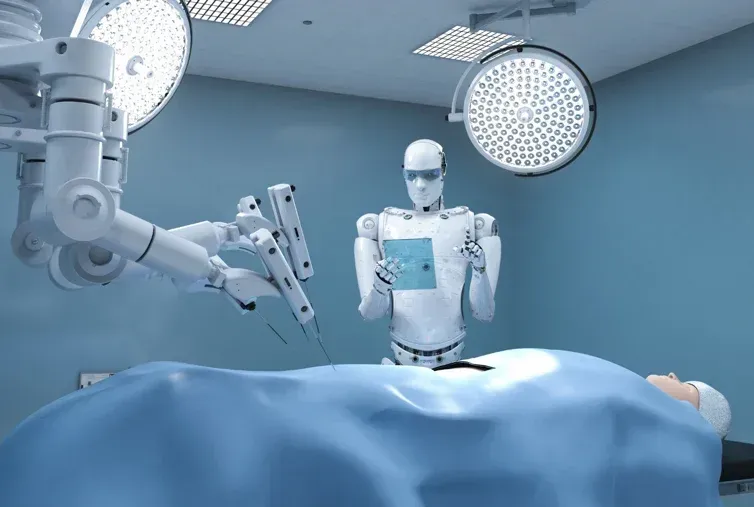
The discourse surrounding AI replacing jobs gained significant traction across industries, and many healthcare professionals share the concern. This draws from the fact that AI's use in healthcare is getting more rampant, with generative chatbots and health and wellness apps as the popular choice for quick, accessible health consultants.
But even with the technology’s intelligence, we still need human expertise to accurately and empathically administer care.
Instead, AI makes a good business partner. It helps evaluate data so we can take action quickly. In this sense, it encourages proactivity instead of replacing work.
For example: On one end, AI generates organized patient data, and we, in turn, take on a role as decision-makers, analyzing results to diagnose and lay out the next steps in treatment plans.
The key, therefore, is interdependence; artificial intelligence and healthcare professionals can work together, complementing and leveraging their respective capabilities to buff up workflows. Imagine the advantages that this combination of technology and professional expertise can bring to the table. Let’s go through them one by one.
Exploring the Benefits of AI in Healthcare
Illuminating Medical Diagnostics
AI has emerged as a game-changer in the realm of medical diagnostics. By analyzing large datasets, AI algorithms can identify subtle patterns and irregularities in medical images and patient records, which often elude human eyes.
Long before a disease becomes symptomatic, AI can spot trends and markers that might indicate its onset. This early identification empowers healthcare professionals to intervene proactively, potentially averting the condition's progression to a more critical stage.
AI's ability to recognize these early signs and anomalies significantly enhances the chances of successful disease management and improved patient outcomes.
Enhancing Data Systems
Automation is a specific feature of AI's vast network of capabilities. This entails going through enormous amounts of data daily, from patient records and insurance claims to clinical notes. AI can efficiently organize, manage, and analyze this data, making it easily accessible for healthcare professionals.
This technology allows AI-powered predictive analytics to anticipate patient readmissions and resource needs. These insights enable healthcare organizations to allocate resources and staff so patients promptly receive care without overdraft costs.
Look out for this ingenious feature coming soon to Meditab's Intelligent Medical Software (IMS) to address your scheduling challenges. Is the issue of patient no-shows affecting your practice? IMS offers a solution by predicting the likelihood of patients missing appointments. It considers factors like the type of interaction, patient location, total no-show history, and even weather forecasts. This predictive capability empowers healthcare providers to proactively prepare for potential patient no-shows and take essential steps to ensure patients stick to their treatment plans.
Improving Revenue Streams and Reducing Costs
Discussions surrounding AI adoption often lead to a paradox. On one hand, the transition to AI-driven processes can introduce costly disruptions that upend established operations. On the other hand, a successful implementation can substantially reduce expensive errors and save valuable time and resources.
Let's delve deeper into this dilemma.
AI-driven automation can efficiently handle administrative tasks, alleviating paperwork, appointment scheduling, and billing burdens. It’s easier to manage processes from one practice management platform, allowing healthcare providers to redeploy their staff for more critical roles.
Furthermore, by optimizing resource allocation, scheduling, and patient flow, AI can significantly enhance the operational efficiency of healthcare facilities. The result? Reduced wait times, improved patient experiences, and cost savings.
As such, despite the initial costs, the long-term investment in AI in the medical field proves to be highly worthwhile, offering substantial benefits for providers and patients alike.
Advance AI Collaborations With EHR Solutions
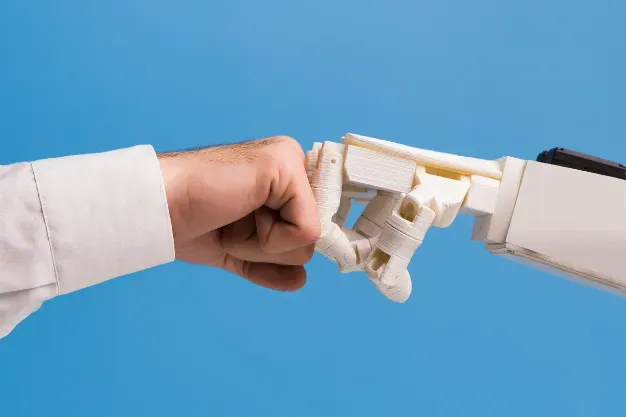
Combining AI with the right tools can make all the difference in a highly competitive healthcare industry. At Meditab, we get this, and we're here to be your partner in this direction to success.
IMS doesn't just offer solutions; it establishes a flexible ecosystem that empowers you to adopt AI with a reliable system at your back. With intelligence and innovation, you can stay confident in providing efficient and top-notch patient care.
Be future-ready with the tools that can pave the way for practice breakthroughs.
Share this post: