Most Popular EMR Systems Used by Modern Medical Practices
The healthcare industry is witnessing the increased use of digitized services, and it is an added advantage for practices that implement smart EMR software systems. Modern EMR software systems can be used for documentation, scheduling, billing, analysis, and communication. As the healthcare industry sets new technological trends, it is also faced with questions. Which EMR systems are popular, and how are they different?
Popularity within the healthcare industry is not based strictly on brand recognition. Rather, it is based on the degree to which an EMR solution is tied into day-to-day operations and is scalable for future growth. Recognizing the characteristics that identify high-quality healthcare EMR systems can help organizations make more informed technology decisions.
Streamline operations with Meditab’s IMS
What Is the Difference Between EMR and EHR Software?
Terms like EMR and EHR software are used interchangeably, but they differ significantly in terms of functionality and scope.
An EMR is primarily designed for use within a single practice. It replaces paper charts and improves internal documentation, making it easier for providers to manage clinical notes, diagnoses, and treatment histories using medical charting systems.
EHR software goes a step further. EHR systems are built for secure data sharing across healthcare organizations, including labs, pharmacies, specialists, and hospitals. This broader scope allows patient information to follow the individual across care settings, which supports coordination and continuity of care.
In short, EMRs focus on the practice, while EHRs focus on the patient’s entire healthcare journey.
Why Consider Using EHR for Your Practice?
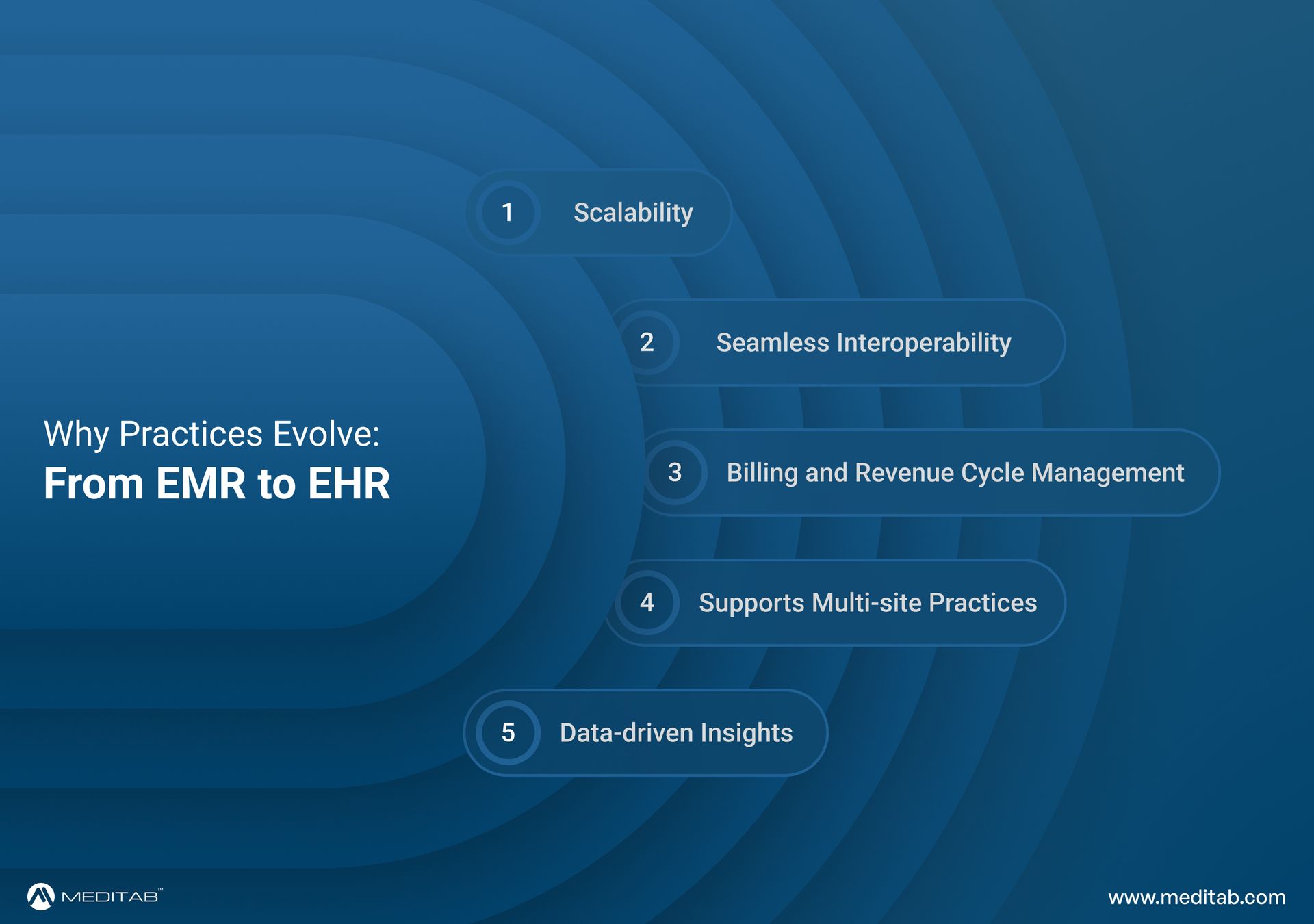
Most practices usually begin with EMR solutions but then transition to full-fledged EHR software as their needs evolve. EHR systems integrate clinical, administrative, and financial processes under a common system or umbrella.
Practices dealing with high patient volume and/or multi-practice locations can benefit from using EHRs. These help in reducing the occurrence of information silos, the issue of re-entering the same information, and improving insights. The software is linked to patient care software and reporting.
As demands for both regulatory compliance and patient convenience continue to rise, EHR adoption can quickly shift from an upgrade to a need.
How to Choose an EHR or EMR System
There is no universal answer to which system is best. The best EMR software for one practice may not be the right fit for another. That said, popular systems tend to share a few common traits.
Usability is critical. Providers need clinical software systems that support fast, intuitive documentation without disrupting patient interactions. Integration is equally important. Strong workflow software should connect scheduling, billing, labs, and prescribing into a seamless experience.
Scalability also matters. As practices grow, clinic management software should be able to support new users, locations, and services without requiring a complete system overhaul. Finally, vendor support and implementation services often play a major role in long-term satisfaction.
Meditab’s IMS Highlights
Meditab’s IMS is intended to address the growing needs of current and future healthcare environments. It integrates different functionalities for clinical, operational, and financial services into the system.
Key features include flexible clinic scheduling software, integrated
practice management software, and specialty-tailored workflow functionality. IMS supports interoperability standards and secure messaging to promote connectivity among practices within the healthcare continuum, utilizing FHIR (Fast Healthcare Interoperability Resources).
Organisations looking for an end-to-end solution to their healthcare software system needs may find that Meditab is an organisation prioritising efficiency and real-world practicability over a 'one size fits all' solution.
Conclusion
Popular EMR software is usually based on how well the software handles day-to-day business functionality, as well as medical accuracy and future scalability. No matter whether the practice is using stand-alone EMR software or an integrated EHR solution, it should just be an extension of their workflow.
With an understanding of the differences between EMR and EHR systems and comparisons based on usability, interfacing, and scalability, healthcare facilities can determine the technology approach that can help support both their patients and stability.
Discover EHR solutions by Meditab’s IMS
Frequently Asked Questions
What makes an EMR system popular among clinics?
Ease of use, reliable support, strong documentation tools, and seamless integration with other healthcare systems are key factors.
Can small practices benefit from EHR systems?
Yes. Many EHR systems are designed to scale and can improve efficiency, compliance, and patient engagement even in smaller settings.
Does integration reduce denied claims?
In most practices, yes. Digital medical charting systems offer better accessibility, security, and reporting compared to paper-based records.
Are EMR systems replacing paper records completely?
Practice size and data migration needs are the deciding factors since the timeline may vary depending on them. Implementations are usually completed within a few months.
Share this post: