Deep Dive Into EMR/EHR Systems and Functionalities
The medical records process has evolved significantly since the days of paper records and file cabinets. The modern healthcare facility uses an EHR System.
Although a majority of medical practitioners may be familiar with the term electronic health record, there may be limited awareness of all the functions these systems support. Essentially, up-to-date EHR software addresses much more than just computerized medical charts. These systems offer interconnection among clinical, administrative, and financial functions in an all-encompassing, secure solution for a medical institution or organization.
Understanding what typically constitutes an EMR and an EHR can help practices select systems that not only meet their needs today but also support them into the future.
Unlock AI-Enabled EHR Capabilities
What Is an Electronic Health Record (EHR) Software System?
An
electronic health record (EHR) refers to the digital version of a patient's medical history. Unlike basic medical software used to manage patient records, EHR systems can be shared among healthcare teams and facilities.
EHR systems in healthcare include clinical documentation, patient demographics, laboratory results, imaging studies, medications, and treatment plans. More importantly, these systems ensure that this information is available in real time, thus facilitating informed decision-making by healthcare providers.
The modern EHR platforms incorporate interoperability, regulatory considerations, and patient engagement, making these systems essential to the healthcare delivery system.
Interoperability, regulatory considerations, and patient engagement tools are prioritized by various EHR platforms. Thus, strengthening the healthcare delivery system.
What Are the Differences Between EMR and EHR Systems
EMRs and EHRs are often used interchangeably, but they are not identical.
EMRs focus primarily on digitizing records within a single practice. These
EMR software programs replace paper charts and improve the efficiency of internal documentation.
EHRs actually take it to the next level. EHR systems are designed to enable information sharing across different organizations. They help with EMR integration across the lab, pharmacy, specialists, and other healthcare environments.
To summarize, the EMR focuses on practice, while the EHR focuses on the patient.
Key Features of EHR Software Systems
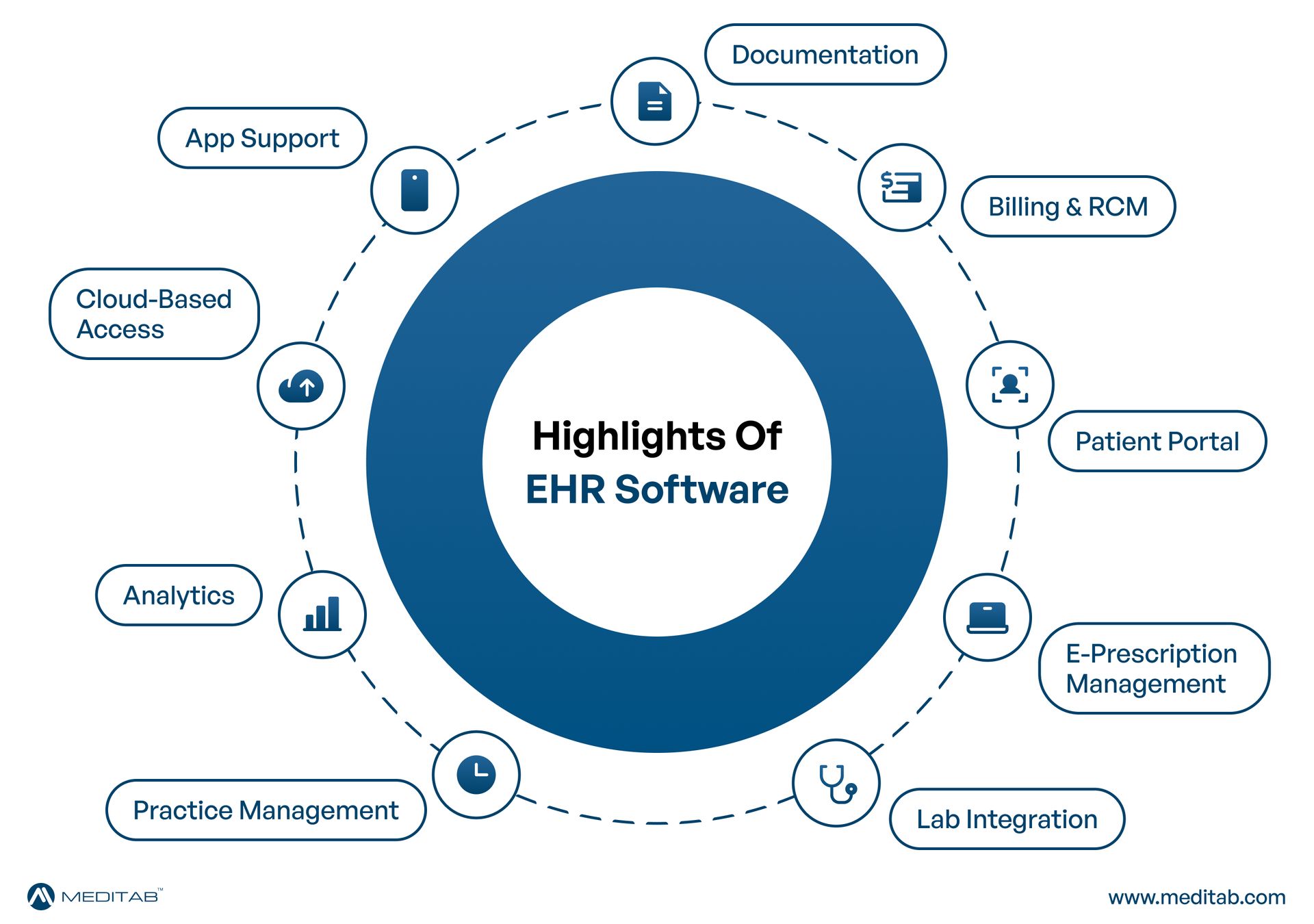
Features offered in modern EHR systems vary, but are mostly aligned with the following list of use cases.
- Clinical Documentation and Medical Charting
All medical EHR systems have powerful medical charting software in their core. This allows the user to record visits, write structured notes, handle problem lists, and track histories.
Templates, voice input, and smart, AI-driven documentation tools help reduce time spent charting while improving accuracy and consistency. - Billing and Revenue Cycle Management
EHR systems offer integrated billing tools that link clinical documentation with claims and payments. Charge capture, coding support, claims submission, and payment posting within one platform help reduce errors and improve reimbursement efficiency. - E-Prescribing and Medication Management
Many EHR solutions offer electronic prescribing, drug-interaction checking, medication reconciliation, and support for controlled substances (meaning Electronic Prescription of Controlled Substances, or EPCS). - Lab and Imaging Integration
This enables the doctor to order lab work and view the results right within the patient’s electronic health record. This allows faster processing times in the lab, which in turn helps the doctor make quicker decisions. - Scheduling and
Practice Management Tools
Besides the functions related to the delivery of patient care, there are extensive Practice Management functionalities in most EHR systems that manage appointments, automated reminder notices, the processes for referrals and authorizations, billing, claims, and tasks within the EHR database. - Patient Portals and Engagement Tools
It allows access to the patient's health information, outlines summaries of their visits, lists lab results, and offers secure messaging. This will reinforce good communication and encourage the patients to make positive changes in their care. - Reporting and
Analytics
Advanced reporting and practice analytics with customizable dashboards that support operational and clinical decision-making. Data-driven insights support value-based care and continuous improvement. - Cloud-Based Access and Security
Most of the current designs work as cloud-based EHRs. This ensures secure access to the system from multiple sites, reduces infrastructure costs, and facilitates system updates and backups. - Mobile Access and Apps
Mobile EHR solutions allow healthcare providers and patients to easily access medical data on the move. Providers can view patient charts, test results, and calendars. Examples of patient applications provided include scheduling tools and messaging.
Benefits of EHRs for Clinics and Healthcare Practices
Adopting comprehensive EHR systems in healthcare delivers benefits across the organization:
- Faster Access to Complete Patient Information
- Improved Care Coordination and Continuity
- Reduced Documentation Errors
- Better Compliance and Audit Readiness
- Increased Operational Efficiency
- Streamlined Revenue Cycle Management
For growing practices, EHRs also scale more easily than traditional systems, supporting new locations, providers, and services.
Choosing an Electronic Health Record System
Implementing the right EHR solution goes beyond merely ticking boxes. It requires seamless integration with clinical and administrative workflows. Key factors to consider include:
- Usability: Intuitive interface for clinicians and staff to minimize administrative burden.
- Connectivity: Ability to share data across healthcare teams and external systems, using FHIR.
- Implementation Services: Support and training during setup to ensure a smooth transition.
- Scalability: Adaptability to evolving medical practices and administrative needs.
- Workflow Integration: Seamless incorporation into existing clinical and operational workflows to avoid disruption.
EHR Software’s Role in HIPAA Compliance
Protection of patients' information is one of the basic requirements for providing healthcare. HIPAA compliance can be achieved successfully through certified EHR solutions that include measures such as role-based security, auditing, encryption, and secure communication. Technology cannot ensure HIPAA compliance, but having a sound EHR is crucial for implementing uniform privacy policies for handling patients' information.
Protecting patients’ information is a fundamental requirement in healthcare. Certified EHR solutions support HIPAA compliance by providing measures such as role-based security, auditing, encryption, and secure communication. While these measures alone cannot guarantee full compliance, a robust EHR is essential for implementing consistent privacy policies and safeguarding patient data.
The Future of EHR: Trends to Watch
EHR technology continues to evolve. Greater interoperability, improved usability, automation, and deeper tools for patient engagement are shaping the next generation of medical records software.
As healthcare moves toward more connected and value-driven models, EHRs will play an even more central role in coordinating care across settings.
Conclusion
The modern EMR and EHR are much more advanced than the electronic versions of patient records from the past. These technologies can integrate people, data, and processes to improve the handling of patient data in ways beyond just electronic storage.
Knowing the common attributes that would be found in today’s EHR platforms would be beneficial to healthcare organizations as they make informed decisions on systems that can help their organizations achieve excellence and facilitate sustainable growth.
Ready to Modernize Your Medical Records System?
Frequently Asked Questions
How do EMR and EHR systems differ?
EMRs are essentially a digital record system used within a single medical practice or clinic. In contrast, EHRs are designed to securely share patient information across multiple healthcare providers, such as hospitals and specialists, as needed.
Are cloud-based EHR systems secure?
Yes, reputable cloud-based EHR platforms use regular security updates and encryption to protect patient data.
Do EHR systems include billing features?
Many EHR systems integrate with billing and practice management tools, though functionality varies by platform.
How long does it take to implement an EHR system?
Implementation timelines vary based on practice size, data migration needs, and training, but many systems can be deployed in a few months.
Share this post: