How Integrated EHR and Medical Billing Software Transform Revenue Cycle
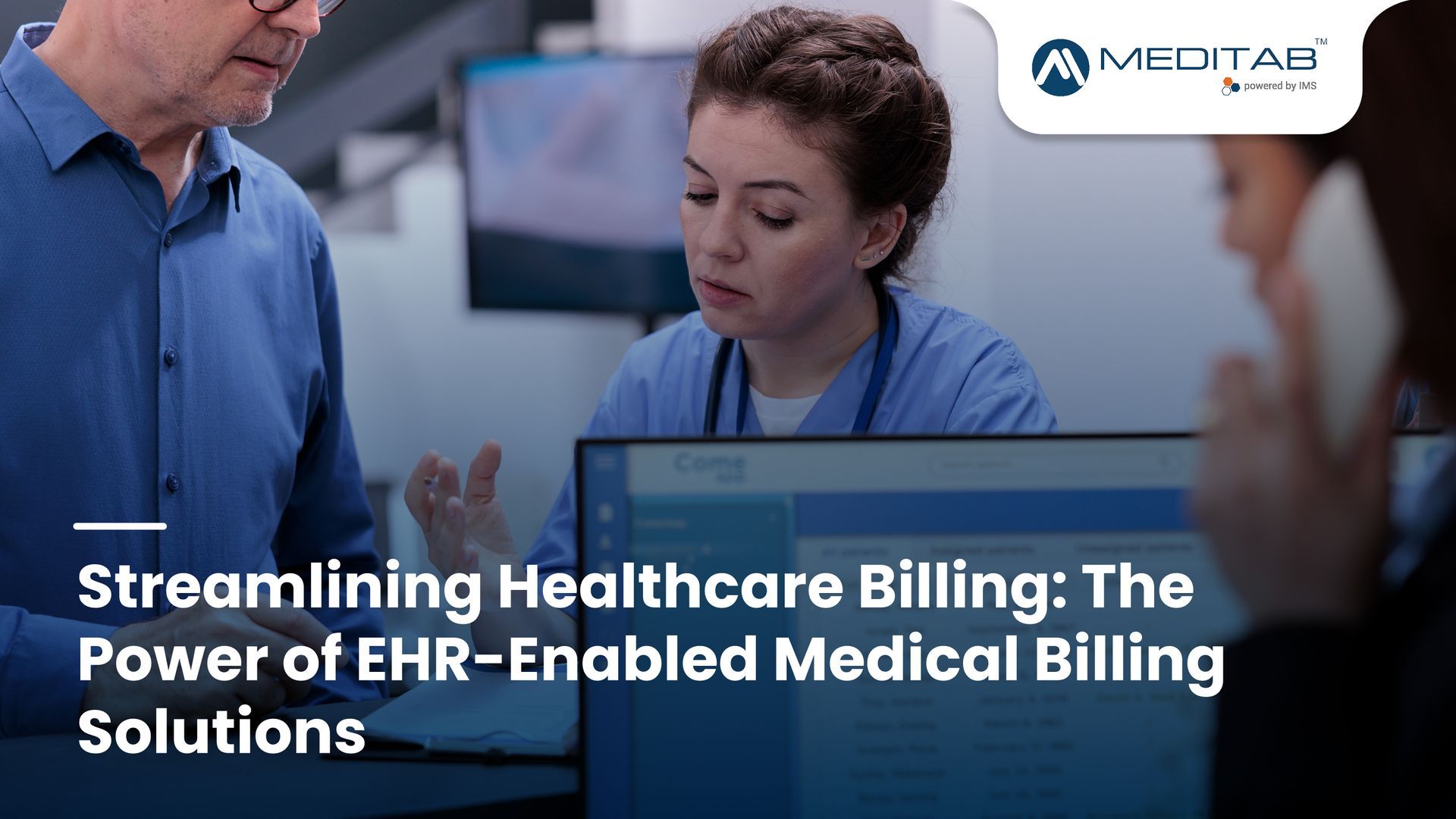
Having multiple admin systems at your healthcare practice can be tedious! Imagine the staff burnout when they have to document a visit in your EHR and then repeat the process in another system for billing and reimbursement. This problem could be expensive and time-consuming for your practice. Because of the current state of the healthcare industry, providers have come to rely on technology in their operations, even when it involves finances.
A unified solution that combines electronic health records (EHR) with medical billing solutions can significantly improve efficiency, reduce errors, and accelerate revenue flow. In this blog, we explore the challenges practices face when implementing standalone systems, the benefits of integrating EHR with billing, and how modern EHR billing software can streamline operations from coding to claims to payment.
Ready to streamline your billing?
Barriers to Implementing EHR in Medical Billing
Implementing an EHR in a medical practice is not without its challenges. Research shows that even though many institutions adopt EHR systems in healthcare, real-world barriers to adoption persist.
Common obstacles include:
- Technical and training constraints:
Staff may lack confidence in the reliability of EHR, and organisations may not commit enough resources for adequate user training and support. - Workflow disruption:
Moving from paper-based or legacy systems to digital ones often requires rethinking clinical workflows, which can temporarily slow operations. - Interoperability issues:
A lack of compatibility between the EHR systems and billing or practice management software could disturb the flow of information, thereby negating most of the benefits of converting to digital records. - Initial costs and administrative overhead:
Switching to an EHR often involves upfront investment in software and hardware, plus staff training, a barrier especially for smaller clinics.
Despite the challenges involved, the ends that can be realized with a well-integrated system are well worth the initial trouble.
Integrating EHR and Medical Billing Software
Integration refers to linking the clinical record-keeping capabilities of EHR with the financial operations managed by billing software. This unified approach ensures that clinical documentation, coding, claims submission, and payment processing are part of a single, seamless workflow.
When properly integrated:
- Clinical entries (diagnoses, procedures, encounters) feed directly into billing and medical claims modules.
- Coding (e.g., ICD, CPT) can be automated or semi-automated from clinician entries, reducing manual effort and errors.
- Claims can be generated and submitted automatically, without manual data entry.
Such integration is often also described as combining
EHR systems in healthcare with revenue cycle management in medical billing platforms.
Features of EHR-Enabled Medical Billing Solution
Modern EHR-enabled billing solutions commonly offer the following features:
- Real-time eligibility verification and insurance checks to immediately validate patient coverage to prevent claim denials.
- Automated claim generation using data from clinical documentation, eliminating repetitive manual data entry.
- Tools for medical coding that map clinical documentation to correct billing codes, streamlining medical coding workflows.
- Claim scrubbing and denial pre-checks to reduce errors before submission.
- Payment posting, reconciliation, and tracking dashboards that give full visibility into outstanding claims, paid invoices, and revenue flow. (PCH Health)
- Analytics and financial reporting enable administrators to monitor billing performance, denials, cash flow, and identify bottlenecks.
All these attributes together provide an integrative
practice management process from initial patient contact right through to payment.
EHR and Medical Billing Systems Integration Process
Integrating EHR with billing systems typically involves a structured process:
- Assessment of current workflows and systems: Understanding how clinical documentation, coding, billing, and claims processing are handled.
- Selection of compatible EHR + billing software: Choosing a solution that supports standard data exchange formats and is configurable to your coding/billing rules.
- Configuration and mapping: Defining how clinician entries map to billing codes, payment rules, insurance eligibility checks, and reimbursement workflows.
- Data migration and testing: Transferring any legacy billing or patient data, performing test claims to verify end-to-end flow, and ensuring compliance.
- Staff training and onboarding: Training clinical as well as billing staff on the new, integrated workflows to ensure smooth adoption.
- Go-live and monitoring: Once live, monitoring key metrics (claim denials, payment turnaround, billing errors) and refining the workflow.
This will thus ensure minimal interruptions within their day-to-day functions and will form the basis of a smooth billing process with zero errors.
How Integrated EHR and Billing Systems Optimize Practice Revenue

Integrated EHR-billing solutions streamline financial operations while enhancing patient experience, providing practices with these key benefits:
Faster Claims Submission & Revenue Cycle:
Claims are automatically generated from clinical documentation, reducing the gap between service delivery and billing, accelerating reimbursements, and improving cash flow.
Reduced Denials & Enhanced Accuracy:
Automated coding, claim scrubbing, and real-time eligibility checks minimize errors, denials, and compliance risks.
Improved Operational Efficiency:
Automation lowers the administrative burden, freeing staff to focus on patient care rather than paperwork, while reducing costs associated with manual tasks and errors.
Better Patient Experience:
Clearer billing statements, faster insurance verification, and potential online payment options enhance satisfaction and reduce confusion.
Enhanced Data Integrity & Reporting:
Unified systems ensure consistent, reliable data, simplifying financial reporting and supporting smarter decision-making.
Scalability & Future-Readiness:
Integrated platforms support high volumes of patients with more than one specialty and complicated coding requirements. This helps practices expand efficiently.
Cost-Effectiveness of EHR Billing Services
Starting to use EHR systems can seem like a significant outlay, but the benefits will eventually make it worthwhile. Research in 2024 found that using EHR systems leads to better bottom-line performance and operational efficiency for healthcare organizations.
The savings come in many forms. Administrative work becomes simpler, billing errors decrease, fewer staff are needed for coding and claims processing, and revenue is collected more efficiently. For practices with a moderate to high patient volume, these systems can make a real difference, resulting in steadier cash flow, fewer denied claims, and a clearer picture of financial performance.
AI’s Role in EHR-Driven Billing Software
The convergence of healthcare automation and artificial intelligence is further enhancing the capabilities of EHR-based billing solutions. AI tools like natural language processing, machine learning, and robotic process automation transform revenue cycle workflows. They automate tasks, detect issues, predict reimbursements, and reduce denials.
For example, AI can:
- Automatically classify clinical documentation to appropriate codes.
- Identify possible coding or documentation errors before submitting claims.
- Forecast reimbursement timelines and revenue flow, enabling better financial planning.
- Provide analytics and insights for operational bottlenecks, denial patterns, and revenue leakage.
With the addition of AI, the healthcare billing system upgraded through EHR becomes more than a repository of data; rather, it becomes an intelligent system.
Conclusion
Integrating the EHR system with medical billing software can prove very helpful for medical practices. If the medical information, coding, claims, and payment are managed in an integrated environment, it becomes easy for healthcare providers to overcome difficulties such as manual updates, medical billing errors, slow payments, and paperwork.
Using an integrated EHR and billing setup helps practices run more smoothly, save money, and get a clearer picture of their finances. On top of that, AI-powered automation and analytics can improve billing accuracy and help the practice stay on top of day-to-day operations without unnecessary stress.
For any modern healthcare practice looking to optimize revenue operations and reduce the burden on administrative staff, an integrated EHR billing solution is no longer just a convenience but a necessity.
Interested in reducing billing errors and accelerating reimbursements?
Frequently Asked Questions
What is the difference between EHR systems and EMR systems?
Usually, an EMR system can be referred to as the electronic equivalent of paper medical records maintained in one medical practice or facility. A larger system related to the EMR is the EHR system, or the electronic health record system. Such a system is designed to work in a collaborative manner so that the medical records of the patients can be accessed by different medical practitioners. The addition of billing or practice management components gives the EHR system enhanced power to handle patient care and revenue workflows.
Can a small clinic afford integrated EHR and billing software?
Though some costs are initially involved when implementing EHR software systems, long-term benefits are evident in terms of low costs, minimizing errors, and streamlining revenue cycles. It can be achieved by proper identification of vendors along with step-by-step implementations to allow a return on investment in the case of a small clinic as well.
Does integration reduce denied claims?
Absolutely. Integrated systems use automated coding, real-time eligibility checks, claim scrubbing, and AI-assisted reviews to ensure claims are accurate and compliant before submission, reducing denial risks.
How long does it take to implement EHR + billing integration?
The time required to implement may vary based on the size of the practice, complexity, and readiness levels of staff members. A small to medium-sized practice takes a few months to perform assessment, mapping, configuration, data migration, testing, and training, while for large practices, it may involve phased implementations.
Will AI replace billing staff?
AI in EHR billing software is designed to support, not replace, human staff. It automates repetitive tasks like coding suggestions, claim scrubbing, and payment predictions, but human oversight remains vital for compliance, exception handling, and final decision-making.
Share this post: