What Drives Patient Satisfaction in Practices?

Patients who seek medical care want to feel cared for, heard, and comfortable throughout the clinical process.
Some may be going through the most challenging time of their lives, so healthcare institutions are there to address their medical needs as well as provide a quality patient experience.
Improving patient experience is among the top priorities for healthcare practices. Satisfaction goes beyond the confines of the clinic—it begins the moment the patient initially contacts the clinic and continues through the follow-up and beyond.
Therefore, healthcare practices must optimize work processes to provide a seamless interactive experience for patients. This is where medical practice management software such as Meditab’s Intelligent Medical Software (IMS) plays a huge role in making patients happy.
Before diving deep into how IMS changes practice management, here are some things to remember about what makes patients smile.
Patients are happy when…
Patient satisfaction in healthcare is rooted in their desire to feel respected and valued.
A National Library of Medicine study defines patient satisfaction as indicators of clinical outcomes, patient retention, and medical practice evaluations.
“It affects the timely, efficient, and patient-centered delivery of quality health care. Patient satisfaction is thus a proxy but a very effective indicator to measure the success of doctors and hospitals.”
-Dr. Bhanu Prakash, Department of Dermatology, Vydehi Hospital
Healthcare providers can ensure their satisfaction by taking notes on the following indicators:
1.Communication.
Patient-centered communication is key. Effective communication between healthcare providers and patients is vital for satisfaction. Patients want clarity and empathetic communication that includes explanations of their condition, treatment options, and any potential risks or side effects.
2. Empathy and Compassion.
Patients value healthcare providers who show empathy and compassion. Feeling understood and cared for contributes significantly to patient satisfaction.
3. Quality of Care.
Patients expect high-quality medical care that leads to positive health outcomes. This includes accurate diagnoses, appropriate treatment plans, and effective management of their health conditions.
4. Accessibility and Convenience.
Accessible healthcare services and convenient appointment scheduling contribute to patient satisfaction. Patients appreciate practices that offer flexible appointment times, minimal wait times, and easy access to medical records and test results.
5. Respect for Dignity and Privacy.
Respecting patients' dignity and privacy is essential for satisfaction. This includes maintaining confidentiality, respecting cultural and personal beliefs, and providing a comfortable and respectful environment during medical examinations and procedures.
Each institution may have varied indicators for patient satisfaction. Here is an example of patient satisfaction indicators based on a study of the University Polyclinic in Messina (Italy).
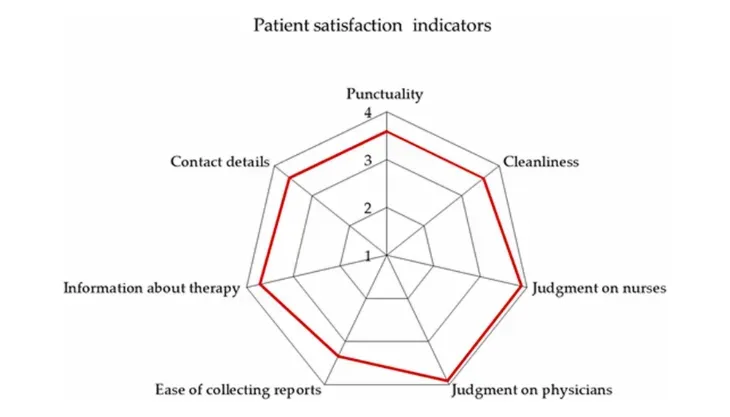
It may be daunting to find the perfect formula for patient satisfaction. This is where IMS becomes an integral tool in providing efficient patient management.
What is IMS and How Can It Help?
Meditab’s IMS is an all-in-one EHR, billing platform, and practice management software designed to streamline various aspects of healthcare and patient management within medical practices.
IMS offers a wide range of functionalities that include facilitating patient access, appointment scheduling, and communication with healthcare providers.
The sole goal is to create a cohesive experience for the patient as one moves along the medical process.
Here's a rundown of IMS features that will surely leave your patients satisfied.
1. Electronic Health Records (EHR)
IMS provides a centralized platform for storing and managing patient health records electronically. Practices can sort data according to patient demographics, medical history, diagnoses, medications, and treatment plans, among others. With an EHR, healthcare providers can access comprehensive patient information in real-time, leading to better decision-making and improved patient care.
2. Practice Management
The system provides tools to streamline various administrative tasks within medical practices. This includes appointment scheduling, patient registration, insurance verification, and inventory management. By automating these processes, IMS helps practices operate more efficiently and effectively.
3. Billing and Revenue Cycle Management
IMS includes features for managing the billing and revenue cycle of medical practices. With IMS, practices can optimize their revenue streams, reduce billing errors, and improve cash flow management. Specialized features include claims processing, insurance billing, patient invoicing, and payment collection.
4. Patient Engagement
IMS facilitates better communication and engagement between healthcare providers and patients. Through the patient portal, patients can conveniently schedule appointments, secure messaging, and access lab results and educational resources. By empowering patients to take an active role in their healthcare, IMS enhances patient satisfaction and loyalty.
5. Compliance and Security
Designed to meet regulatory standards such as HIPAA, IMS ensures the security and privacy of patient information. It incorporates robust security measures to mitigate unauthorized access, data breaches, and cyber threats. With IMS, medical practices can uphold compliance with industry regulations and effectively safeguard patient data.
Making patients smile with an efficient workflow
IMS relieves the healthcare practice of much of the administrative workload, enabling them to focus more on patient care. On the other end, patients will feel the care even after their time in the clinic with the automated patient check-out notifications. Practices can actively communicate with the patient through the IMS portal.
Here are other changes your patients will experience with a robust practice management software like IMS.
- Patients gain improved access to their healthcare information through patient portals.
- Patients can easily reach out to their providers with questions or concerns, receive timely responses, and participate actively in their care decisions.
- Patients experience simplified appointment scheduling through convenient online booking options and automated reminders.
- Patients benefit from personalized care delivery as healthcare providers can access comprehensive patient information in real time.
Keep patients happy with Meditab’s IMS
Delivery of patient-focused care requires that we provide care in a particular way, not just sometimes or usually, but always.
For healthcare practices looking to enhance patient satisfaction and improve efficiency, partnering with Meditab as their all-in-one medical software company is an ideal choice. Meditab's medical practice management software is just one of the many systems we offer practices committed to innovation, continuous improvement, and patient-centered care.
IMS empowers healthcare providers to deliver high-quality care through optimizing practice operations. It allows IMS practices to prioritize patient satisfaction and enhance the healthcare experience, from personalized care delivery and streamlined appointment management to specialty-specific features and robust compliance measures.
Keep your patients happy and your practice thriving by contacting Meditab for a free demo of IMS today. Experience the power of IMS firsthand and discover how it can revolutionize your practice operations while maximizing patient satisfaction.
Share this post: